
Sculpture for
commercial spaces.
Planning sculpture for a commercial property starts with three decisions: where people will encounter it, whether it belongs on a wall or stands in the space, and who will approve and deliver each part of the work. Set those decisions alongside the building schedule before requesting fabrication proposals.
Creative Metal Design develops original metal sculpture and fabricates artists’ designs from our Frederick, Maryland workshop. This guide uses completed work to help teams plan artwork for lobbies, courtyards and entrances.
By Creative Metal Design. Workshop examples from Pete Markey.
Wall-mounted or freestanding?
For a lobby, wall sculpture can create a focal point above a reception desk or across a shared room. The available wall, viewing distance, lighting and projection into the room belong in the same conversation. Share the wall construction with whoever is developing the mounting approach.
A freestanding piece can be seen from several approaches. In a courtyard or at an entrance, review the artwork alongside paths, planting, doors and the space people need to move through. Agree who will assess the base, foundations and other site requirements for that particular design.
The following projects demonstrate different forms and fabrication methods. They are useful references for those choices, rather than specifications to copy into a new building project.
Three approaches
to the space.

A lobby wall, Washington, DC
Mark Whalen hand-formed this piece after the client supplied a reference image and the design developed through discussion. The client chose its powder-coated color.
Planning question: how will the artwork relate to the reception desk, wall finish and light?
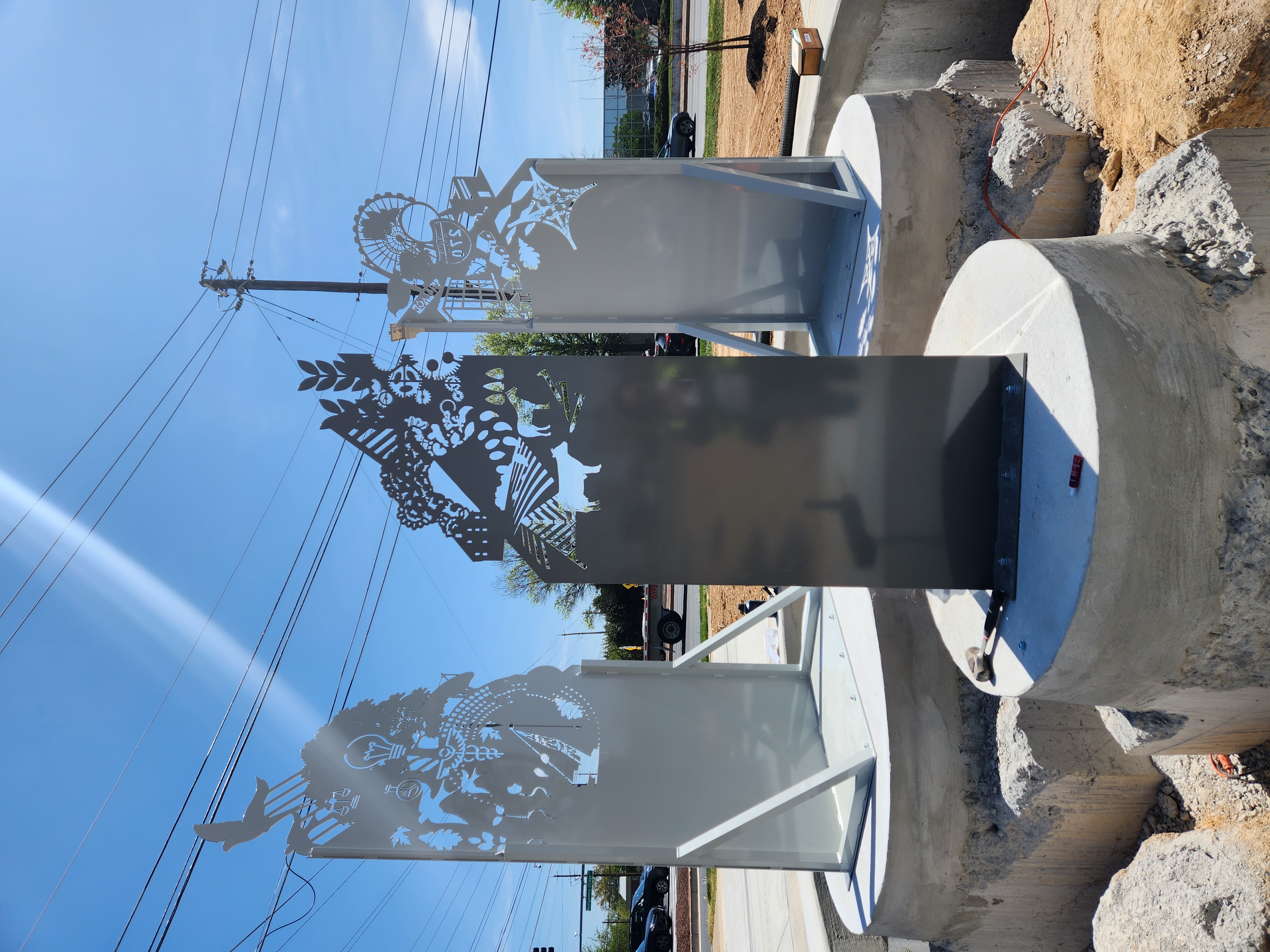
Three panels, Gaithersburg
CMD fabricated three tall cut-metal panels for an outdoor installation. The panels stand separately on circular concrete bases.
Planning question: how will separate elements read from the main approaches and the spaces between them?

A conch shell, Annapolis
This 20-foot abstract conch shell has an aluminum body, a blue powder-coated finish and a stainless steel base required by the project’s engineering.
Planning question: who is responsible for the artwork, supporting structure and site preparation?
Name the decision makers.
A commercial commission can involve an owner, art advisor, artist, architect, landscape designer, builder and fabricator. Their roles vary by project. Before proposals are compared, record who is responsible for these decisions:
- Artwork approval: who selects the concept, approves changes and agrees the final form and finish.
- Design and fabrication: who supplies the design, what is ready to build and what still needs development.
- Building and site work: who handles engineering where required, foundations or wall preparation, lighting and access.
- Delivery and installation: who arranges transport, lifting, the installation window and coordination with other trades.
- Handover: who accepts the completed work and receives the agreed finish and care information.
These are responsibilities to agree, not a statement that one contractor provides every item. If a task is undecided, name the person who will resolve it.
What should a commercial sculpture proposal cover?
Give each fabricator the same dated design information, size range, finish direction and site photographs. State whether you are seeking design development, fabrication of an approved design, or both.
Ask the proposal to distinguish the artwork from the other work needed to deliver it. Record inclusions, exclusions, open decisions and assumptions about site readiness. A price for fabrication alone cannot be compared directly with a proposal that also includes transport and installation.
Use our fabrication brief for drawings and dimensions. The commissioning guide covers the wider process and cost factors.
When should the fabricator join the project?
Start the conversation while the design and building details can still be coordinated. Share the opening date or construction milestones, but distinguish a preferred date from an agreed installation window.
For an occupied lobby, explain access hours and any restrictions on bringing work through the building. For an outdoor installation, identify when the site will be ready and which other trades need to finish first. Timing should be agreed around the actual design, approvals and site conditions.
Can CMD work with our art advisor or chosen artist?
Yes. CMD welcomes conversations with art advisors and design teams, develops original work and fabricates designs by other artists. Identify who owns the design decisions and what you need the workshop to contribute. Explore our sculpture fabrication service.
What should we send for an initial discussion?
Send the property location, the proposed setting, photographs or plans, the design stage and your role. Include an approximate budget, size and schedule, and name the people involved in approval and delivery. An early concept is enough if you clearly identify the decisions still open.
For a wall-mounted piece, use the wall sculpture brief. For a courtyard or entrance, our outdoor sculpture guide considers viewpoints and the landscape.
Bring the artwork
into the plan.
Tell us about the property, the team and the idea. We welcome substantial sculpture projects across Maryland, Washington, DC and Northern Virginia.
Discuss a commercial sculpture